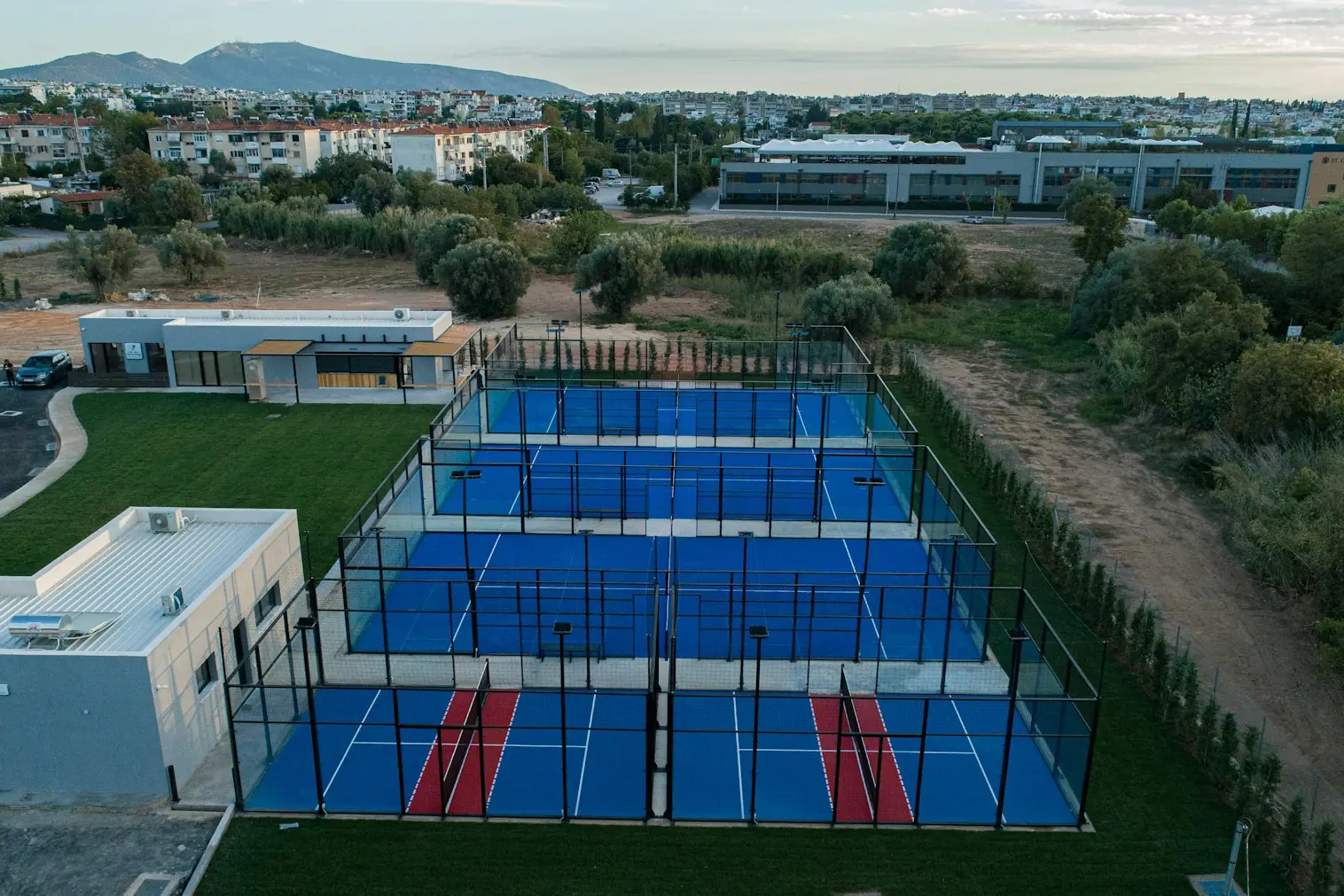
How padel clubs make money
Short answer: padel clubs earn mostly from booking courts by the hour, plus memberships, coaching, leagues, events, equipment sales and food and drink. Each court is typically booked by four players at once, which is why padel can earn more per square foot than tennis. Success depends on local demand, peak-hour occupancy and keeping building costs in check.
A simple revenue check
A quick way to test a site is to multiply courts × bookable peak hours × rate × occupancy. For example, with assumptions you should replace with local numbers:
| Assumption (example only) | Value |
|---|---|
| Courts | 6 |
| Peak hours per court per week | 30 |
| Price per court hour | $80 |
| Peak occupancy | 60% |
| Peak court revenue per year | 6 × 30 × $80 × 0.6 × 52 ≈ $449,000 |
Then add off-peak, coaching, memberships and events, and subtract rent, staff, utilities, software, maintenance and debt. Check prices and occupancy at clubs near you before relying on any number.
Planning steps
- Market check. Players nearby, existing clubs, tennis and pickleball communities.
- Site. Warehouse or land, clear height, parking, zoning (check with your city).
- Court count and layout. Get builders to draw it; see padel club construction.
- Budget. Courts, building, fit-out, soft costs, opening reserve. Use our estimator for the court line.
- Financing and lease.
- Build and pre-sell. Founding memberships and leagues before opening.
Questions
How much does it cost to open a padel club?
It depends mostly on the building. The courts themselves often run about $40k–$85k each indoors; leases, fit-out, amenities and opening costs usually add more than the courts.
How many courts does a padel club need?
Many US clubs open with 4 to 8 courts. More courts spread fixed costs but need more players; phasing is common.
Is a padel club profitable?
It can be where demand is strong and occupancy is high, but results vary widely by market and building cost. Model it with local prices and conservative occupancy.